Russia hits Ukrainian train shortly after Boris Johnson and top European officials leave station - BBC
The Post
What Walter Read
Meta-Analysis Brief
Suggested post type: REPORT — Three independent bodies (BBC, The Guardian, The Times of India) covered the same event with materially different emphasis — BBC and Guardian foreground Russian escalation and the diplomatic near-miss, while The Times of India uniquely includes Russia's rationale and reciprocal Ukrainian strikes — and they conflict on details like whether Petraeus rode with Johnson. That divergence in framing, plus the absence of any primary source, makes this a coverage-comparison story rather than a straight REPORT.
Consensus Facts
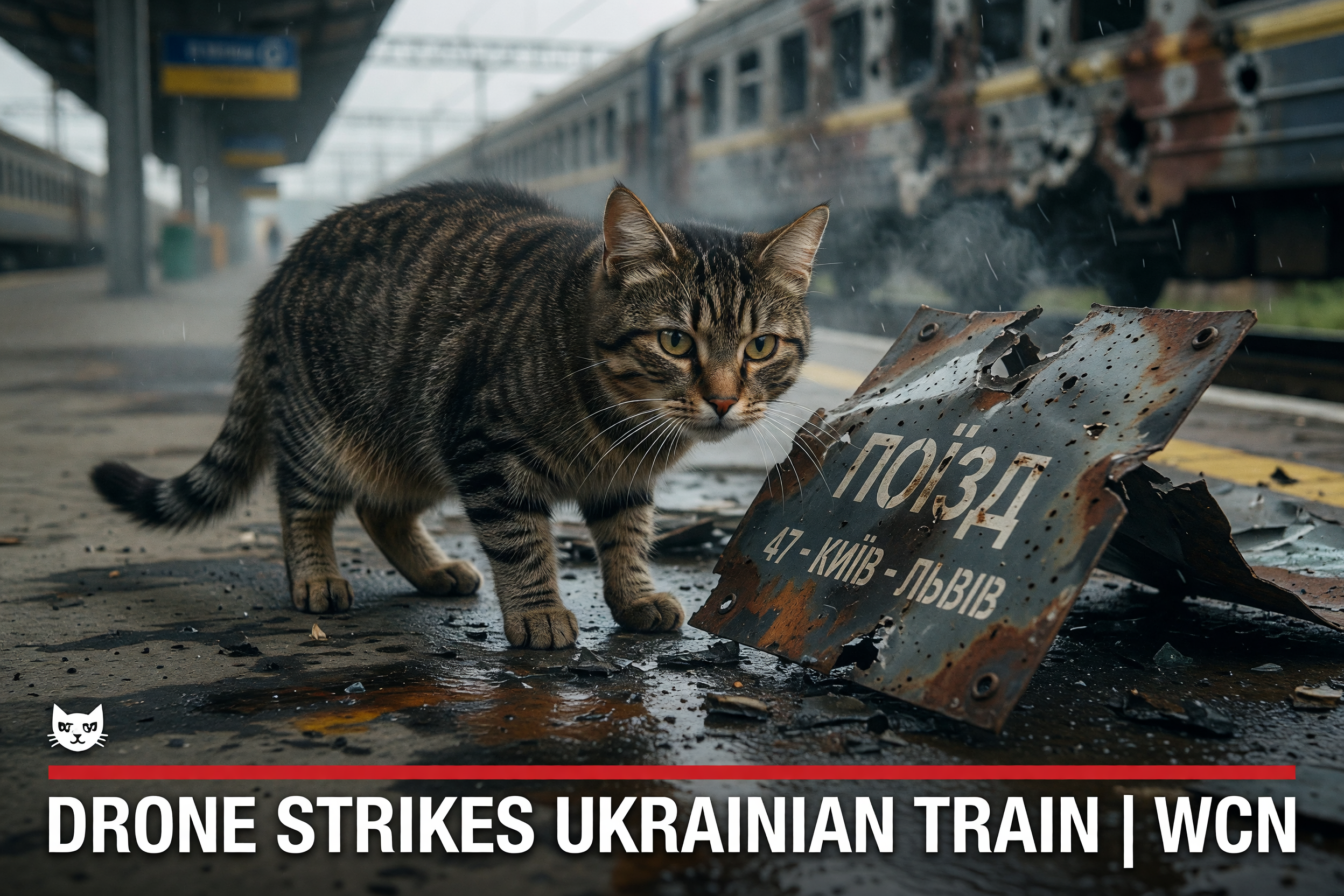
- A Russian drone struck a train near the Yahodyn area on Ukraine's border with Poland on Sunday, September 13, 2026.
- No casualties were reported from the strike on the train itself.
- The train that was hit had its passengers evacuated before the strike; the drone hit the train's engine/locomotive.
- Former UK Prime Minister Boris Johnson and other European security officials had travelled along the same rail line on a different ('diplomatic') train shortly before the strike, after attending a conference in Kyiv.
- Former CIA director David Petraeus was also associated with rail travel through the area at the time (BBC places him on another train at Yahodyn; The Guardian says he was on the diplomatic train with Johnson).
- Ukraine's state railway operator Ukrzaliznytsia said it was 'quite possibly'/'entirely possible' that the drone's intended target was the diplomatic train, which had departed earlier than scheduled due to real-time timetable changes prompted by the constant threat of Russian strikes.
- The strike occurred approximately 2 km from the Polish border (BBC, Times of India), with a truck/lorry also struck less than 1 km from the Dorohusk-Yahodyn crossing (Guardian, Times of India).
- Russia's Defence Ministry said it had struck railway/logistical infrastructure used to move military cargo into western Ukraine.
- Ukrainian Foreign Minister Andrii Sybiha described the attack as 'Putin's terror knocking directly on the doors of the EU and Nato' and renewed calls for sanctions.
- Johnson wrote on X/social media calling it a 'random and senseless' attack and urging allies to provide Ukraine more air defences.
- Former Swedish PM Carl Bildt, who attended the Kyiv conference, said his train was told to prepare for evacuation before being cleared to continue.
- Polish PM Donald Tusk held an emergency meeting and warned that Russian escalation could affect Polish territory (BBC, Guardian).
Disagreements
Framing Analysis
Primary Source Alignment
- No primary source documents (railway statements in full, official Polish/Ukrainian releases, or Russian MoD statement text) were located for this story. Alignment cannot be independently verified against a primary document.
- The most-cited primary-like statement is Ukrzaliznytsia's Telegram statement; BBC, The Guardian, and The Times of India all quote it consistently as saying the diplomatic train may have been the target and departed early due to timetable changes.
- No primary source documents were located; all claims rest on outlet reporting, official social-media posts, and railway/ministry statements quoted secondhand.
- Reuters appears in the dossier as headline-only, so its body-level reporting could not corroborate any facts; consensus rests on BBC, The Guardian, and The Times of India bodies.
- The two BBC entries are the same article on two domains (bbc.com/bbc.co.uk) and count as a single source, not two independent corroborations.
- No outlet provides independent verification that the diplomatic train was actually the intended target — this remains Ukrzaliznytsia's stated assessment ('quite possibly'/'entirely possible'), not a confirmed fact.
- No outlet reconciles whether Johnson and Petraeus were on the same train (BBC and Guardian directly conflict on this point).
- Russia's stated rationale (targeting military-cargo infrastructure) is reported only by The Times of India (and referenced generically by BBC as 'railway infrastructure'); the Guardian and Reuters entries omit Russia's characterization.
- Only The Times of India reports reciprocal Ukrainian strikes inside Russia the same night; BBC and Guardian coverage omits this, giving an asymmetric picture of the day's escalation.
- None of the outlets provide details on the type/range of the 'jet-propelled drone' beyond the label, nor independent confirmation of the strike distance from the border (2 km figure attributed to Ukrainian/Polish authorities only).
- No outlet clarifies the exact size, composition, or full passenger manifest of the 'diplomatic train,' nor how the schedule change was decided or communicated.
Verification Gate Results
All verification checks passed.
Draft Analysis
No factual issues found.
Story Selection
15 candidates detected, 13 passed triage
Selected: Russia hits Ukrainian train shortly after Boris Johnson and top European officials leave station - BBC
Source: news_fetcher