How was Flydubai co-pilot cleared despite being deemed a security risk? - Al Jazeera
The Post
What Walter Read
Meta-Analysis Brief
Suggested post type: REPORT — Six articles (five of them Al Jazeera, one Guardian meta-piece) cover the same event with materially different emphases — heroism narrative, official 'terrorist act' labeling, the co-pilot's identity, and the vetting 'loophole' — and they diverge on the weapon, who regained control, hospitalization location, and the reliability of the attacker's identification. With no primary source available and heavy reliance on overlapping wire sources, the most valuable output is a coverage comparison that surfaces what is confirmed versus single-sourced.
Consensus Facts
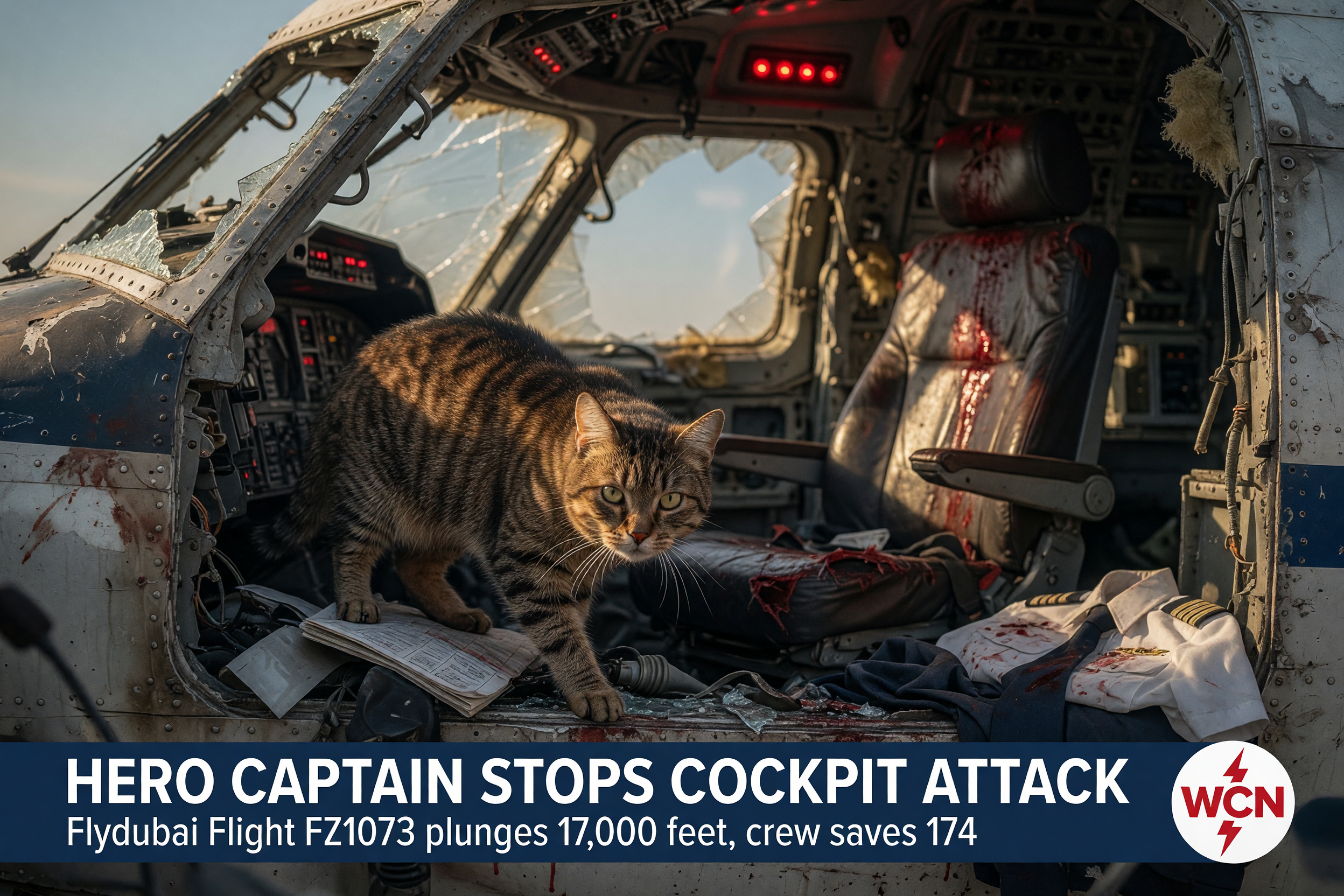
- On Wednesday, September 30, 2026, Flydubai Flight FZ1073 departed Dubai bound for Tel Aviv, carrying 174 people.
- A co-pilot attacked the captain, Indian national Smit Machchhar, inside the cockpit during the flight.
- The aircraft (a Boeing 737 MAX 8) plunged roughly 17,000 feet (about 5,180 metres) in approximately two minutes.
- Despite being wounded, Captain Machchhar opened the cockpit door from inside, allowing passengers and crew to enter and subdue the co-pilot.
- The plane was brought back under control and made an emergency landing in Tabuk, northwestern Saudi Arabia.
- All 174 people on board survived without serious injury.
- The United Arab Emirates described the incident as an attempted 'terrorist' act/operation.
- The co-pilot has been identified in multiple media reports — citing unnamed sources — as Hamam al-Hammami, an Omani national, though there has been no official confirmation of his identity.
- Captain Machchhar recounted the ordeal in a video call with Indian Prime Minister Narendra Modi from a hospital bed.
- Israeli Prime Minister Benjamin Netanyahu praised Machchhar and characterized the co-pilot as having undergone radical Islamist indoctrination and appearing suicidal; investigators are examining possible outside direction, including potential Iranian links.
- Investigators are still working to establish the motive and whether the co-pilot acted alone or had connections to extremist groups.
Disagreements
Framing Analysis
Primary Source Alignment
- No primary source documents (investigation reports, transcripts, official filings) were located for this story. The UAE prosecutor general's statement via WAM and Machchhar's video statement to Modi are referenced only secondhand through outlet reporting, not provided as primary excerpts.
- The investigation's final results and official motive determination have not been released; all motive claims remain attributed to officials or anonymous sources rather than a documented finding.
- The five Al Jazeera articles (Articles 1–5, including the Google News-hosted Article 5) share the same newsroom; much of the apparent corroboration across them is effectively one outlet, and most identification/vetting details trace to the same wire pool (AP, CNN, WSJ, Reuters) — meaning fewer truly independent sources than the volume of articles suggests.
- No outlet independently confirmed the co-pilot's identity; the name Hamam al-Hammami rests entirely on anonymous diplomatic and unnamed sources plus a LinkedIn profile, with explicit notes that there is no official confirmation.
- No outlet established what the co-pilot's alleged 'extremist views' actually were, or whether Oman ever formally notified other countries or airlines of its concerns.
- Flydubai's own vetting process and response are thinly covered — a Gulf diplomat says al-Hammami 'underwent standard security checks,' but the airline itself is not quoted explaining how a reportedly barred pilot was hired.
- The accounts of who physically regained control of the aircraft (Trump's 'Israeli plumber,' the two reserve pilots, or passengers/crew generally) are not reconciled; no outlet adjudicates these competing versions.
- There is no response from the accused co-pilot or any legal representative, consistent with his detention, but this absence of the other side is not flagged by most of the articles.
- No technical/aviation-authority confirmation is given for the striking claim that the tail/rudder partially detached; it appears via Trump's remarks and a Guardian reporter's speculation about what investigators 'will look at.'
- The most newsworthy accountability thread — the vetting/'loophole' question — appears in only two of the six items (Article 5 and, obliquely, the Guardian), while the majority of coverage centers on heroism and official 'terrorist act' labeling.
Verification Gate Results
All verification checks passed.
Draft Analysis
No factual issues found.
Story Selection
15 candidates detected, 12 passed triage
Selected: How was Flydubai co-pilot cleared despite being deemed a security risk? - Al Jazeera
Source: news_fetcher